Showing posts with label flavonols. Show all posts

Wednesday, January 19, 2022

Quercetin in cocoa

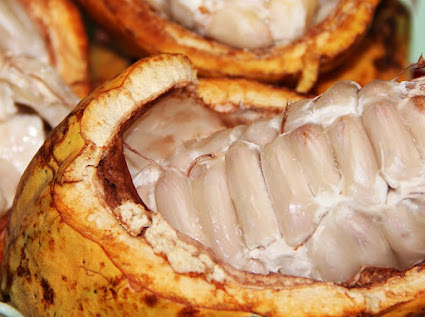
The major flavonols in cocoa are isoquercitrin (23 mg/100 g), quercetin 3-glucuronide (5 mg/100 g) and quercetin (2 mg/100 g). In general, cocoa powder contains 30 mg flavonols/100 g.

Quercetin (3,3’,4’,5,7-pentahydroxyflavone) belongs to an extensive class of polyphenolic flavonoid compounds almost ubiquitous in plants and plant food sources. It possesses higher free-radical scavenging properties than (+)-catechin and has been shown to be one of the most effective flavonoids for the preservation of endogenous R-tocopherol in LDL cholesterol.

Quercetin is a unique bioflavonoid was first discovered by Nobel Prize laureate Albert Szent Gyorgyi in the year 1930. Quercetin’s name derives from the Latin word “Quercetum”, which means Oak Forest, and also belongs to the flavonol category, which is not produced in the human body.

This compound is also found in various food products and plants, including fruits, seeds, vegetables, tea, coffee, bracken fern, and natural dyes.

Quercetin provides many health promoting benefits, including improvement of cardiovascular health, eye diseases, allergic disorders, arthritis, reducing risk for cancers and many more. Several studies demonstrated that quercetin has a significant role in inhibition of breast, colon, prostate, ovary, endometrium, and lung tumor cancer cells.
Quercetin in cocoa
Friday, May 21, 2021

Flavonoid reduce platelet aggregation

Platelets and leukocytes contribute to arterial thrombosis and to inflammatory processes. An increasing number of foods have been reported to have platelet-inhibitory actions, and research with a number of (-) epicatechin and (+)-catechin, flavan-3-ols (flavanols) rich foods, including cocoa and chocolate, suggests that these foods may provide some protection against thrombosis.

Flavanols are also commonly found in other foods and beverages including grapes and tea.

Procyanidins with as many as 10 flavanol subunits have been identified in cocoa and chocolate. Studies with subjects given flavanol- and procyanidin-rich foods have reported positive vascular effects including increased plasma antioxidant status, improved endothelium function, and reduced platelet reactivity.

Regular consumption of flavanols and procyanidins from cocoa, in a range easily accommodated in a normal diet, increased plasma concentrations of epicatechin and catechin, but there were no effects on markers of oxidation.

Similarly, study found that after the consumption of 25 g chocolate, supplying 220 mg flavanols and procyanidins, there was a decrease in primary hemostasis (as measured by the time to occlude an aperture in a collagen membrane) 2 h after consumption. (JAMA 2002;287:2212–3)
Flavonoid reduces platelet aggregation

The most popular articles

Other interesting articles

  • Lecithin (E322) is a naturally occurring phospholipid widely employed as an emulsifier in the dairy industry. Extracted from soybeans, sunflower seeds, or ...
  • Basmati rice is one of the world’s most distinctive rice varieties, celebrated for its long, slender grains, delicate flavour, and characteristic fragran...